What Is Denial Management in Healthcare? The Complete 2026 Guide




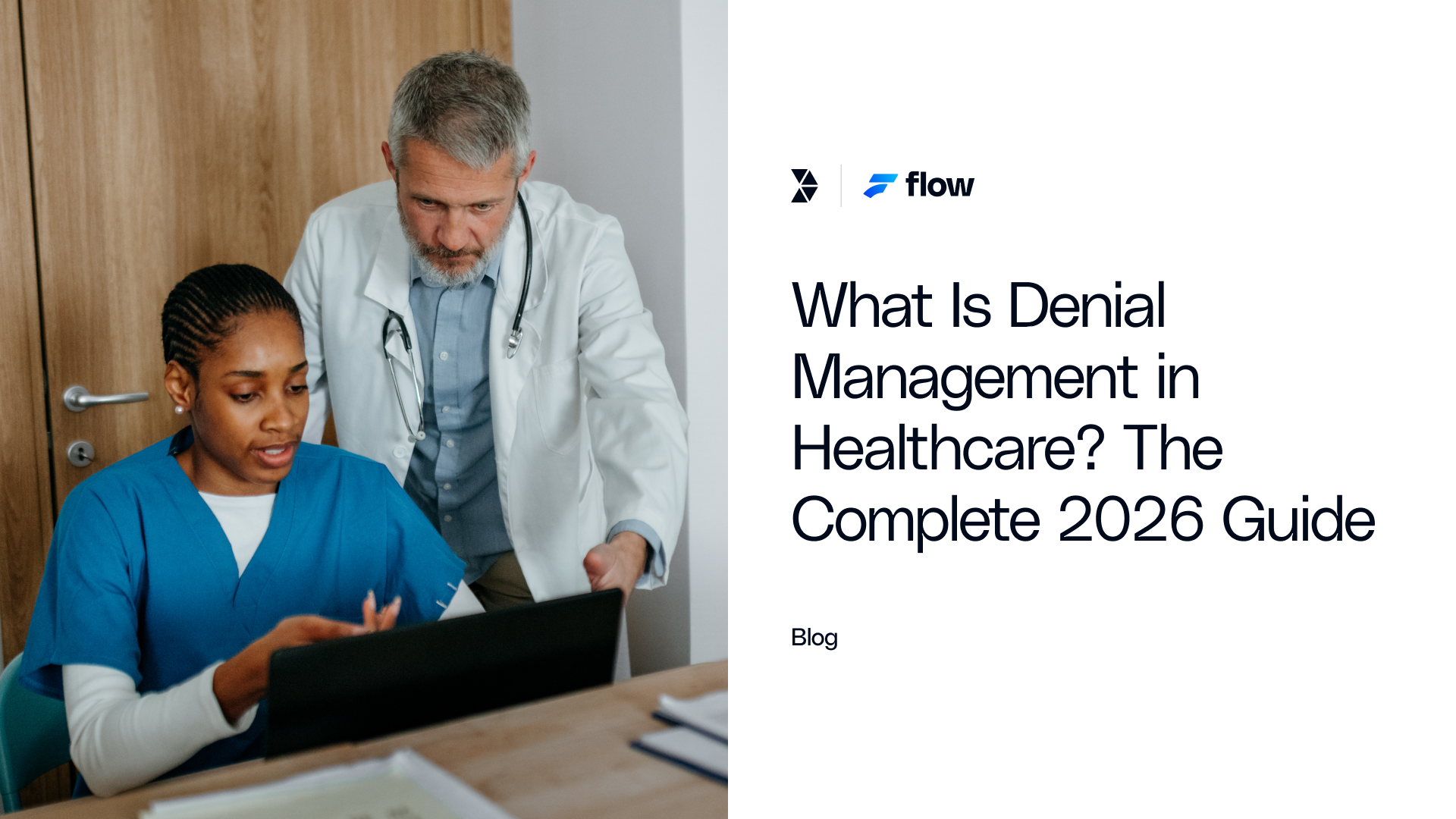
A mid-sized orthopedic practice had just wrapped up a productive week. The clinical team had seen a full patient load, documentation was thorough, and the billing team had submitted everything on time. By all accounts, the revenue cycle was moving as it should. Then the remittance advice came in, and with it, a wave of denials.
Not one or two, the kind you chalk up to human error and fix before lunch, but a pattern of rejections arriving from multiple payers, each with a different reason code, each representing a claim the practice had already earned.
The billing coordinator spent the next three days cross-referencing codes, rewriting appeal letters, chasing payer portals, and pulling documentation from clinical notes. By the time the team had addressed half the denied claims, new ones had already stacked up behind them.
The revenue was not lost, but it was delayed, diluted, and costing the practice far more in administrative effort than anyone had originally budgeted for. And the frustrating part? Most of those denials were entirely preventable.
This is not a story unique to that practice. It plays out every day across hospitals, specialty clinics, and health systems of every size, and it is the exact problem that denial management in healthcare was built to solve.
What is Denial Management in Healthcare?
At its core, denial management in healthcare is the structured process of identifying why insurance claims are denied, correcting the underlying issues, recovering the revenue that is rightfully owed, and building the systems that prevent the same denials from happening again.
It sounds straightforward when described that way, but the reality is that healthcare denial management operates at the intersection of clinical documentation, payer policy, medical coding, administrative workflow, and revenue cycle management, which makes it one of the most complex and high-stakes functions in any provider organization.
The denial management process is not a single action. It is a continuous cycle that spans the entire revenue cycle, from the moment a patient registers at the front desk to the final payment posted against a claim. Every handoff along that journey, from eligibility verification to prior authorization, clinical documentation, coding, and billing, represents a potential gap where a denial can originate. Managing denials well means understanding where those gaps are and systematically closing them.
Why the Revenue Cycle Breaks Down Without It
To understand why healthcare denial management matters so much, it helps to understand what the revenue cycle looks like when denials go unmanaged. Claims that are denied and never reworked represent direct revenue loss. Claims that are denied, reworked, and resubmitted represent delayed revenue plus the administrative cost of that rework. Claims that are denied, escalated to appeals, and fought through multiple levels of the process represent both financial cost and significant organizational strain.
Revenue cycle management, or RCM, is the financial backbone of any healthcare organization. It encompasses every process involved in tracking patient care from registration through final payment. When the denial rate inside that revenue cycle rises, the entire system slows down. Cash flow becomes unpredictable, accounts receivable days increase, and the cost to collect every dollar goes up. Provider organizations that do not have a disciplined approach to the denial management process often find themselves in a position where they are delivering care, submitting claims, and still consistently falling short of the revenue they are owed.
When healthcare denial management is done well, it removes all of that friction. It keeps cash moving, reduces the cost to collect, and protects the patient relationship by ensuring that coverage decisions are accurate and resolved quickly.
A Step-by-Step Look at Denial Management
A disciplined denial management process follows a logical sequence on paper, but inside most revenue cycle teams, it rarely plays out that way. Appeal windows close quietly, reason codes get misread, and the same denial resurfaces the following month. The fix is not working faster; it is building the right structure so that every denial gets resolved before the window to recover it disappears.
Step 1: Identification
This means monitoring claims from submission through adjudication and catching denials as early as possible by reviewing electronic remittance advice and explanation of benefits documents consistently. The faster a denial is identified, the more time the team has to respond before appeal deadlines close.
Step 2- Categorization and Root Cause Analysis
Each denial needs to be reviewed to understand exactly what went wrong. Was it a coding error? A documentation gap? A missing authorization? An eligibility issue at registration? The answer determines what comes next, whether that is a corrected claim, an appeal, or a process change upstream. Without a thorough investigation, resubmitted claims often get denied again for the same reason.
Step 3- Correction, Resubmission, or Appeal
For soft denials, this typically means gathering missing information and submitting a corrected claim. For denials that require an appeal, it means building a case by compiling clinical documentation, citing relevant payer policies or coverage determinations, drafting appeal letters, and tracking the response through each level of the appeals process.
Step 4- Prevention
Every denial that gets resolved carries information about what went wrong and where. Organizations that use that information to fix root causes upstream, whether through staff training, workflow redesign, documentation improvement, or technology implementation, are the ones that see their denial rates decline over time. Prevention is what transforms healthcare denial management from a reactive cost center into a proactive driver of financial performance.
The Case of AI Denial Management
AI denial management is changing what is possible because it addresses the fundamental limitations of manual workflows. An AI-powered system can process far more claims than any human team, identify patterns across large volumes of data, and predict which claims are at risk of denial before they are even submitted.
It can also prioritize the denial worklist based on factors like dollar value, appeal deadline, and historical recovery rate, ensuring that the highest-impact work always gets done first. This means that limited human capacity gets directed toward the cases where judgment actually matters, rather than being consumed by high-volume, routine rework.
The shift to AI denial management is not about replacing the people who understand healthcare billing. It is about giving them a system that handles the repeatable, high-volume work at scale so that skilled analysts and coders can focus on the complex denials that genuinely require expertise. The result is faster resolution, higher recovery rates, and a denial management process that gets smarter over time as it learns from payer behavior and outcome data.
How Flow by Innovaccer Is Building the Future of Denial Management
Flow does not just resolve denials after they happen. It prevents them before they start. By connecting prevention, detection, prioritization, and recovery in one integrated system, Flow creates a closed-loop denial management process that continuously reduces the denial rate while accelerating cash flow.
The Insight Agent layers on continuous visibility into denial trends, payer behavior, and reimbursement patterns, so revenue cycle leaders can make decisions based on real data rather than lagging reports.
See how Flow by Innovaccer helps healthcare organizations spend less time chasing denials and more time delivering care.
with the Power of Comet


.svg)